
The Lead
Fixed income starts Wednesday with yields still elevated and oil again driving the inflation discussion. The 2-year Treasury ended Tuesday at 4.39%, the 10-year Treasury at 4.79%, and the 30-year Treasury at 5.25%. The 10-year real yield held at 2.43%, keeping long-duration Treasuries tactical.
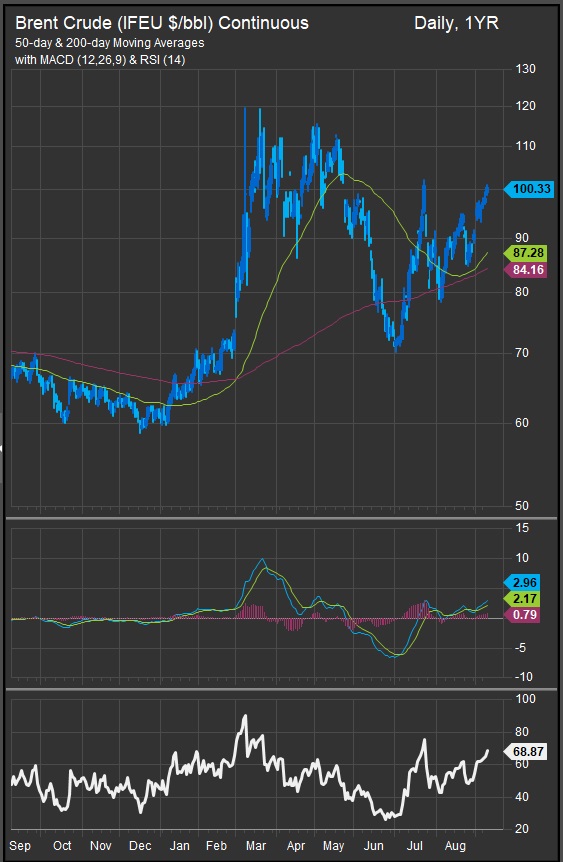
Oil is the key macro pressure point. September 9 data shows WTI crude at $93.03, and current market reporting shows WTI near $94 and Brent near $100 after renewed Middle East strikes raised supply-disruption risk.
The growth data is not weak enough to force a clean duration rally. August payrolls rose 162K, the unemployment rate held at 4.1%, and the labor force participation rate rose to 61.6%. ISM Services also remains expansionary, with the August Services PMI at 55.4 and the Prices Index at 72.6.
The setup still favors an income-oriented allocation: collecting yield from lower-volatility bond segments rather than relying on a sharp decline in Treasury rates to drive total return. Keep emphasis on ultrashort, short-duration, core bonds, senior floating-rate credit, short investment-grade credit, and selective municipal exposure while keeping long-duration Treasury exposure tactical.
Rates Tape
| Rate | Latest | 1D Change | 1W Change |
| 2Y Treasury | 4.39% | +2.3 bp | -0.1 bp |
| 10Y Treasury | 4.79% | +1.4 bp | -0.1 bp |
| 30Y Treasury | 5.25% | +0.3 bp | -1.9 bp |
| 2s10s Curve | 40.0 bp | -1.0 bp | 0.0 bp |
| 5s30s Curve | 68.1 bp | -2.0 bp | -3.1 bp |
The curve has stabilized versus last week, but the yield level remains the issue. TLT gained 0.40% over the past week, EDV gained 0.68%, and ZROZ gained 1.01%, but IEF was up only 0.07% and VGIT fell 0.26%. Long duration is no longer breaking down, but the 30-year Treasury above 5% still argues for tactical sizing.
Macro Signal Board
| Signal | Latest | 1D Change | 1W Change | 1Y Percentile | Trading Read |
| 10Y Treasury | 4.79% | +1.4 bp | -0.1 bp | 100th | Yields remain near a one-year extreme. |
| 30Y Treasury | 5.25% | +0.3 bp | -1.9 bp | 96th | Long-end risk remains elevated above 5%. |
| 10Y Real Yield | 2.43% | 0 bp | -1 bp | 98th | Real yields remain the main duration headwind. |
| 10Y Breakeven | 2.37% | +2 bp | +2 bp | 83rd | Inflation compensation is rising. |
| Fed Funds Implied Rate | 3.79% | 0 bp | -2 bp | 78th | Policy pricing is still less dovish than late August. |
| IG OAS | 81 bp | 0 bp | 0 bp | 79th | IG spreads are contained but not cheap. |
| HY OAS | 267 bp | -1 bp | +2 bp | 6th | HY spreads remain very tight. |
| MOVE Index | 76.1 | +3.0 | -1.7 | 72nd | Rates volatility remains elevated. |
| WTI Crude | $93.03 | +$1.55 | +$2.81 | 81st | Oil is the dominant inflation-risk input. |
The macro setup is supportive for income but still cautious for duration. Credit spreads remain contained, but oil, breakevens, real yields, and rates volatility are all elevated enough to argue against aggressive long-duration exposure.
Calendar Watch
Tuesday’s data was mixed. The NFIB Small Business Optimism Index fell to 98.7 in August from July’s 99.8, but remained above its 52-year average of 98.0. NFIB also reported that inflation as the single most important business problem rose to 16%, while actual sales worsened.
Consumer credit was firmer than expected. September 9 data showed July consumer credit rising $18.1B versus $10.8B consensus. The Federal Reserve’s G.19 release framed the July gain as a 4.2% seasonally adjusted annualized increase, with revolving credit up 2.5% and nonrevolving credit up 4.8%.
Today’s calendar is lighter but still relevant for the front end and Treasury supply:
| Time | Release | Consensus | Prior |
| 8:15 a.m. | ADP Weekly Employment Change | — | — |
| 10:00 a.m. | Employer Costs for Employee Compensation | — | — |
| 1:00 p.m. | 10-Year Treasury Note Reopening | — | — |
BLS lists Employer Costs for Employee Compensation for 10:00 a.m. ET today, followed by PPI on Thursday and CPI on Friday. Treasury’s tentative auction schedule lists a 10-year note reopening today and a 30-year bond reopening Thursday, keeping supply pressure in the long-end discussion.
ETF Flow Leaders
| ETF | Segment | 1W Return | 1W Flows | 1M Flows |
| SGOV | Ultra-Short Treasuries | +0.07% | +$2.81B | +$6.08B |
| BND | Broad Market Bonds | +0.14% | +$963M | +$2.66B |
| BIL | 1–3 Month T-Bills | +0.08% | +$741M | +$276M |
| SHY | Short Treasuries | +0.02% | +$563M | +$891M |
| GLD | Gold / Macro Hedge | +0.75% | +$548M | +$4.67B |
| USFR | Floating-Rate Treasuries | +0.06% | +$521M | +$511M |
| JPST | Ultra-Short Active | +0.04% | +$516M | +$1.06B |
| JAAA | AAA CLOs | +0.10% | +$389M | +$761M |
| VTEB | Municipal Bonds | -0.22% | +$350M | +$500M |
| FBND | Broad Active Bonds | +0.11% | +$261M | +$1.28B |
The flow signal is concentrated in cash management, short duration, and core bonds. SGOV, BIL, SHY, USFR, and JPST show strong demand for lower-volatility exposure while front-end yields remain elevated. BND, FBND, IUSB, and BNDX show core bond allocations remain active.
Senior floating-rate credit remains supported. JAAA attracted $389M over the past week and $761M over the past month, consistent with demand for higher-quality structured credit exposure that carries less duration risk than long corporates.
The main caution is that the flow signal is not broad risk-on. VCIT saw $346M of weekly outflows despite strong one-month inflows, TLT lost $263M despite positive one-week returns, TIP lost $214M, IEI lost $127M, and JNK lost $76M.
Trading Implications
Core bonds: Maintain exposure, but keep rate sensitivity measured. BND, FBND, IUSB, and BNDX flows are constructive.
Duration: Favor short duration over a broad duration chase. SGOV, BIL, SHY, USFR, and JPST are leading flows, while real yields remain elevated.
Long Treasuries: Keep long Treasuries tactical. TLT posted a positive weekly return, but weekly flows turned negative and the 30-year Treasury remains above 5%.
Credit: Prefer short investment-grade exposure over longer-duration corporate credit. VCSH attracted assets, while VCIT outflows show intermediate credit demand cooled after strong one-month buying.
High yield: Stay cautious. HY spreads remain very tight, and JNK outflows suggest investors are not broadly adding lower-quality credit risk.
Cash management: Keep ultrashort and floating-rate Treasury ETFs in the allocation mix. SGOV, BIL, USFR, and JPST remain strongly supported by flows.
Munis: Maintain tax-aware municipal exposure, but manage duration carefully. VTEB and MUB attracted weekly inflows despite negative recent returns.
TIPS / inflation hedges: Favor short-term inflation protection over broad long-duration TIPS. VTIP attracted assets, while TIP outflows show investors are not broadly chasing duration-heavy inflation exposure.
CLOs / loans: Senior floating-rate credit remains useful as a volatility buffer. JAAA flows remain constructive.
Bottom Line
The September 9 setup is supportive for income but still cautious for duration. Treasury yields are stable versus last week but remain historically high, the 30-year Treasury is above 5%, oil is near recent highs, breakevens are rising, and PPI/CPI are still ahead. ETF flows favor SGOV/BIL/SHY/USFR/JPST cash and short-duration exposure, BND/FBND core bonds, JAAA senior structured credit, and selective munis. Keep long Treasuries and longer-duration credit tactical until oil, inflation data, and the long end stabilize.
Sources
- FactSet Research Systems Inc., ETFFixedIncome.com Fund Universe Return & Flow Database, September 9, 2026
- FactSet Research Systems Inc., September 9 rates, credit, volatility, commodity, FX, and economic-calendar data
- U.S. Bureau of Labor Statistics, August 2026 Employment Situation
- Institute for Supply Management, August 2026 Services PMI
- NFIB Small Business Economic Trends, August 2026
- Federal Reserve G.19 Consumer Credit, July 2026
- BLS September 2026 release schedule
- U.S. Treasury tentative auction schedule
- Reuters market reporting on oil and Middle East supply disruption risk
Disclaimer: This commentary is for informational and educational purposes only and should not be considered investment advice. ETF return and flow data can change quickly and may reflect short-term trading activity rather than durable allocation trends. Fixed income investments are subject to interest-rate risk, credit risk, liquidity risk, inflation risk, tax considerations, and potential loss of principal.

